



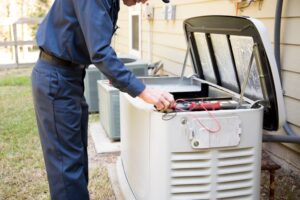
 New Jersey storm season can bring downed power lines, flickering lights, and the occasional multi-day outage. While a standby generator can help keep your home powered, it’s only reliable if you do regular maintenance on it. Before the first major storm rolls through, take a few minutes to run through this residential generator maintenance checklist. At Corbin Electrical Services, Inc., we’ve spent over 45 years keeping New Jersey homes powered through outages, and we’ll walk you through what to check yourself and what to leave to a professional.
Key Takeaways
- Schedule generator maintenance before storm season begins.
- Check for warning lights, fuel supply, oil condition, and debris around the generator.
- A professional inspection helps identify issues before they lead to failures.
- Corbin Electrical Services, Inc. offers comprehensive generator maintenance and repairs throughout New Jersey.
Why Storm Season Generator Maintenance Is Important in New Jersey
New Jersey sees its share of nor’easters and summer thunderstorms. Each storm puts stress on the power grid. Power outages affect everything from refrigeration and air conditioning to sump pumps, medical equipment, internet service, and home security systems.
Your standby generator is supposed to start automatically when utility power fails. However, like any mechanical equipment, it requires routine care to work reliably. Preventive maintenance helps extend equipment life and reduces the chance of unexpected repairs during severe weather.
Homeowner Generator Maintenance Checklist Before the First Major Storm
You don’t need to be an electrician to check your generator. There are several simple checks homeowners can do before scheduling professional service:
- Check for alerts or warning lights: Most standby generators have a control panel that displays fault codes or warning lights if something’s not working correctly. If you notice a warning message, avoid resetting the system until you contact a qualified generator technician.
- Confirm fuel supply and oil condition: Make sure propane or diesel tanks have sufficient fuel. If your generator uses natural gas, verify there are no obvious issues with the gas supply or shutoff valve.
- Clear debris around the unit: Leaves, mulch, and overgrown vegetation around your unit restrict airflow and create a fire risk. Clear a few feet of space on all sides before storm season arrives.
- Listen for unusual sounds during use: Start your generator and let it run for a few minutes. Grinding, knocking, or sputtering noises are signs of a problem that needs professional attention.
- Confirm transfer switch readiness: Your transfer switch is what moves your home from utility power to generator power automatically. Confirm it’s set to automatic so that your generator kicks in as soon as you need it, even if you’re not home.
These checks only take a few minutes. If anything looks off, contact a professional to look at it rather than trying to troubleshoot it yourself.
What Should a Professional Maintenance Visit Include?
While homeowners can perform basic visual inspections, a complete maintenance visit involves more in-depth looks. At Corbin Electrical Services, Inc., we offer maintenance agreements to help keep your generator running. This gets you priority scheduling during emergency and annual maintenance visits.
During a generator maintenance visit, our factory-trained technicians inspect the engine oil, wiring, air filters, bolts, and connections, along with battery health, carbon monoxide levels, and ventilation. We also check for leaks and confirm the unit is venting safely. We use only authorized parts, and every technician we send out is trained on the specific brand and model in your home, including Generac, Kohler, Honeywell, Cummins, and Briggs & Stratton units.
How Monitoring Can Help During Storm Season
Many modern standby generators include remote monitoring capabilities. Monitoring systems, like the Mobile Link app for Generac units, let you check whether your unit is ready for use, currently running, or in need of service, right from your phone. You’ll also get alert notifications the moment an issue arises, so you can get it fixed before the storm hits. When combined with routine maintenance, monitoring helps keep your backup power system prepared throughout the year.
Prepare for Storm Season with Corbin Electrical Services, Inc.
Storms are unpredictable, but your generator shouldn’t be. Regular maintenance helps ensure your standby generator is ready to protect your home when severe weather causes power outages. Corbin Electrical Services, Inc. has served New Jersey homeowners for more than 45 years, and we’ve built our reputation on expert repairs, service, installation, and maintenance for residential and commercial generators. Contact us today to schedule your visit for generator maintenance before a storm.
Corbin Electrical Services – “We Generate Peace of Mind”
Frequently Asked Questions About Generator Maintenance
How often should I have my generator professionally serviced?
At least once a year. Most homeowners schedule their visit before storm season to ensure the unit is ready for the months when outages are most likely.
Can I run my generator maintenance check myself?
A basic visual check, like the one in this checklist, is safe to do yourself. Anything involving wiring, fuel lines, or internal components should go to a licensed technician.
How long does a generator maintenance visit take?
Most residential visits take about an hour, depending on the unit and whether it needs any repairs. Commercial units with more components may take longer.
What’s included with the maintenance agreement with Corbin Electrical Services, Inc.?
A maintenance agreement includes priority scheduling, regular service visits, and repair. It can also be paired with our 24/7 home monitoring package.
Why is my generator making noise when it runs?
Some hum is normal. Grinding, knocking, or sputtering isn’t. These sounds point to a mechanical issue that needs professional diagnosis.
How do I know if my automatic transfer switch is working?
A professional maintenance visit includes testing the transfer switch to verify it communicates properly with the generator and safely transfers power during an outage.