



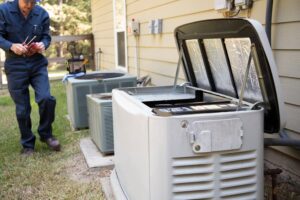
 Power outages can happen without warning. A standby generator helps keep essential systems running automatically, giving you peace of mind when the power goes out. At Corbin Electrical Services, Inc., we’ve guided New Jersey residents through the home generator installation process for more than 45 years. Here’s what to expect from start to finish.
Key Takeaways
- Every installation starts with a look at your home’s power needs and priorities.
- The right generator size depends on your home’s square footage, appliances, and what you need to keep running during an outage.
- Licensed electricians handle permits, placement, electrical work, and transfer switch installation.
- At Corbin Electrical Services, Inc., we test your system and walk you through how to use it before we leave.
Step 1: Home Backup Power Assessment
Every successful generator installation starts with understanding your home’s power needs. During an initial consultation, our electricians evaluate your electrical system and discuss what you want your generator to power during an outage.
Common systems to consider include:
- Heating and cooling
- Refrigerators and freezers
- Sump pumps
- Medical equipment
- Lighting
- Internet and Wi-Fi equipment
- Security systems
At Corbin Electrical Services, Inc., we also review your electrical panel, existing service, and available installation space. This assessment helps us determine the best solution for your home.
Step 2: Generator Sizing and Equipment Selection
Choosing the right generator is one of the most important parts of the project. A generator that’s too small may struggle to support your home’s electrical demand. One that is too big may increase your operating costs without providing additional benefits.
At Corbin Electrical Services, Inc., our technicians can help you choose the right generator model for your home based on its size, your appliances, and must-have circuits. Our inventory includes Kohler, Honeywell, Briggs & Stratton, and Generac generators that fit a wide range of budgets.
Step 3: Permits, Placement, and Utility Coordination
Before we begin installation, we take several steps behind the scenes.
- We obtain any required permits to ensure your generator meets local electrical and building codes.
- We coordinate with utility providers whenever necessary.
- We look at your yard and property to decide the best place to install your new generator.
Generators need a stable foundation and must be clear of windows, doors, vents, and property lines. This careful planning helps prevent delays and ensures your generator is installed correctly the first time, in a safe place that won’t disrupt your neighbors.
Step 4: Electrical and Fuel Connections
Once we prepare the site, our technicians will start the installation. While this can be done by yourself, we don’t recommend it. Hiring our experienced professionals ensures the entire process goes smoothly, including:
- Transfer switch installation: Your transfer switch moves your home from utility power to generator power automatically.
- Dedicated wiring and panel work: We run wiring sized for your generator’s output and connect it to your home’s electrical panel.
- Fuel line considerations: Whether your generator runs on natural gas, propane, or diesel, we connect it to your fuel source correctly to prevent leaks.
Each of these steps is done to code. A mistake in any one of them can create a safety hazard or cause your generator to fail when you need it most.
Step 5: Startup, Testing, and Homeowner Walkthrough
With Corbin Electrical Services, Inc., we don’t consider the installation complete until we thoroughly test your generator. We start it up, assess the transfer switch, check the fuel line, and confirm the unit works the way it’s supposed to. Then, we walk you through how to use it, so you feel confident using your entire backup power system the next time the power goes out.
Maintenance After Home Generator Installation
Regular maintenance helps keep your generator ready for the next storm or unexpected outage. At Corbin Electrical Services, Inc., we provide these services, including oil changes, filter replacements, and a yearly inspection. We recommend a maintenance agreement, which gives you priority scheduling on all repairs. You can also choose our home monitoring package or invest in Mobile Link generator monitoring, which lets you check your generator’s status remotely.
Choose Corbin Electrical Services, Inc. for Professional Generator Installation
A standby generator is an investment in your home’s safety and comfort. Choosing an experienced installation team helps ensure your system works when you need it.
For more than 45 years, Corbin Electrical Services, Inc. has provided trusted electrical solutions throughout New Jersey. Our factory-trained technicians handle every step of the home generator installation process, from load assessments and equipment selection to professional installation, maintenance, monitoring, and repairs. Contact us today to schedule your generator consultation.
Frequently Asked Questions About Home Generator Installation
How long does a home generator installation take?
Most installations are completed within a few days once permits are approved. However, the exact timeline depends on your generator’s size and your home’s electrical setup.
Do I need a permit to install a home generator?
Yes. Most municipalities require an electrical permit for a standby generator. We manage the permitting process for you, so you don’t have to navigate it on your own.
What’s the difference between an automatic and manual transfer switch?
An automatic transfer switch detects a power outage and switches your home to generator power within seconds. A manual transfer switch requires you to flip it yourself.
Can I install a generator myself?
We don’t recommend it. Between the electrical connections, fuel lines, and permits, installing a home generator requires a professional electrician who can guarantee the work is safe and code compliant.
What fuel does a standby generator use?
Most residential generators use natural gas or propane.
How often should my generator be serviced?
At least once a year. Routine inspections help keep your generator working and extend its lifespan.
Corbin Electrical Services – “We Generate Peace of Mind”